Cat Boarding and Grooming in Port Harcourt: How to Compare Facilities and Keep Your Cat Stress-Free
Price, hours, vaccination papers, where the cat sleeps and what the reviews really say: how to compare boarding and grooming in Port Harcourt, and how to keep your cat calm while you are away.
In this article
- Cat boarding and grooming in Port Harcourt: what to compare
- The price you can reach
- The hours that answer
- The papers first
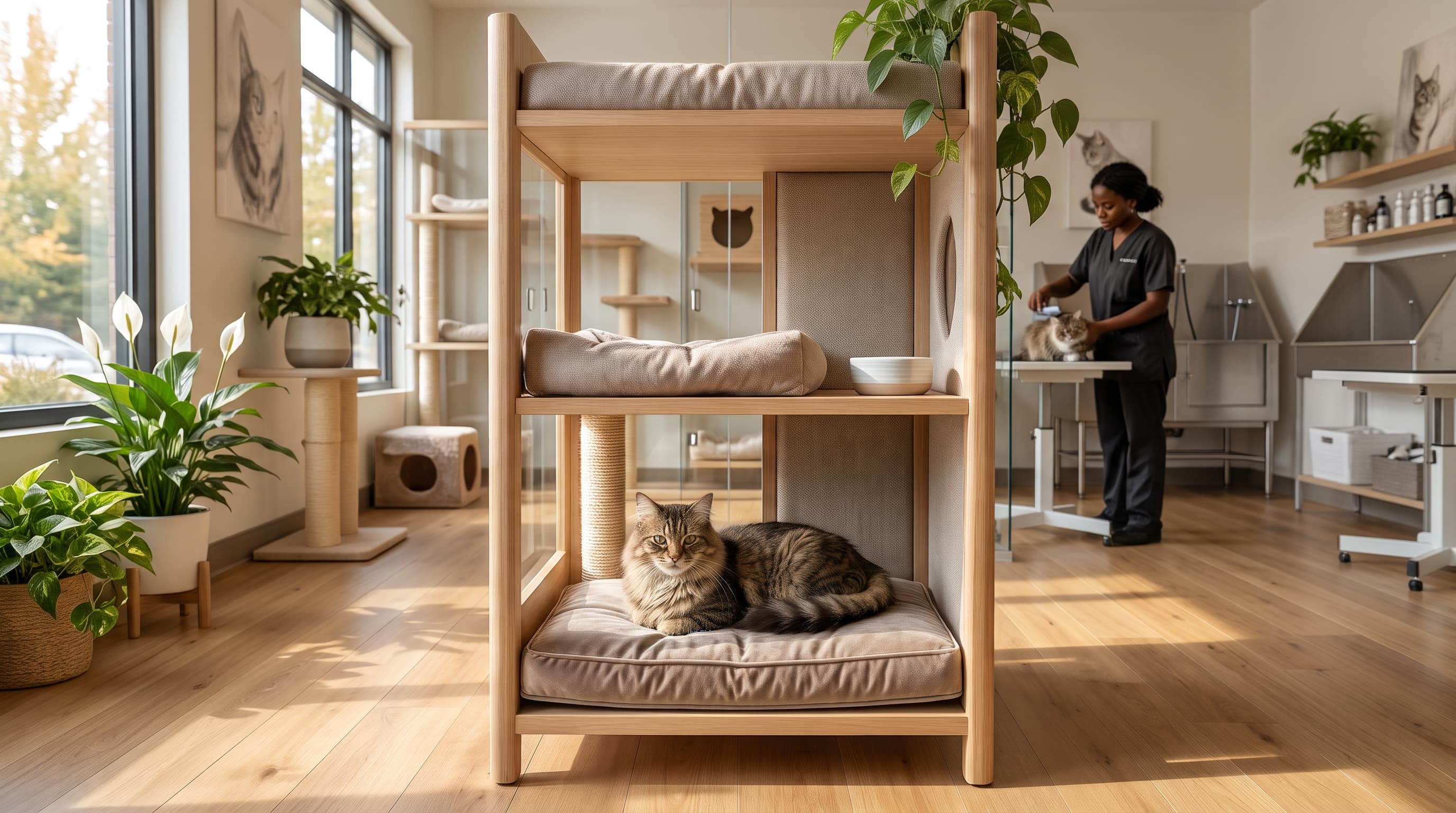
- Where the cat sleeps
- What other owners said
- Keeping your cat stress-free
- Before the trip
- At drop-off
- While you are away
- Grooming: short sessions, early stops
- The stop signs
- After the groom
- Your drop-off checklist
- Before you go
You have five days in Port Harcourt without your cat. Your neighbour means well, but Tom has opinions about new houses. So you search cat boarding and grooming in port harcourt, and every result promises the same thing: happy cats, clean cages, fair prices. This guide is how to compare them properly, and how to keep your cat calm while you are gone.
First, the honest part. We have not visited every cattery in Rivers State, and a listing is not an endorsement. Our verification page shows what we check before a badge goes on a listing; the final call stays with you.
Cat boarding and grooming in Port Harcourt: what to compare
Four dimensions decide most choices: the real price, the hours you can reach, the paperwork, and where your cat actually sleeps. A fifth is what other owners have said, which is why every PetMap listing carries category ratings from reviews.
The price you can reach
Ask for the full price in writing before you pay anything: nightly rate, feeding, grooming add-ons, and what happens if your stay runs late. Prices vary by area and season, so treat any number you see online as the start of a conversation, not the bill. Cheap is fine until it means one pair of hands for too many animals.
The hours that answer
Operating hours are the easiest thing to print and the easiest to get wrong. Call once during the day, and once in the evening, before you book. You want a number answered by a person, and a real plan for the night your cat falls ill on a Sunday.
The papers first
Vaccination records come before comfort. UC Davis lists the usual core requirements for boarding cats: herpes virus, calici virus, panleukopenia and rabies, and advises preferring facilities with strict vaccine policies. In the UK's statutory boarding guidance, the operator must see an up-to-date vaccination record for every cat. If your cat's last booster is older than a year, most catteries will turn you away.
Cats Protection makes the same point from the owner's side: boarding catteries may want a vaccination history in advance, so check before you travel.
For a cat going into boarding, revaccination seven to ten days beforehand may be warranted if the cat has not been vaccinated in the preceding year. Talk to your vet about the timing, and carry the records with you rather than trusting your memory.
Where the cat sleeps
Ask to see where your cat will spend the nights: the size of the space, the light, the noise, and how far it sits from barking dogs. Then ask what happens each day. The UK statutory guidance requires daily behaviour monitoring, with changes recorded and acted on when there are signs of stress, fear or aggression. If a facility cannot describe its daily routine, that is your answer.
What other owners said
Ratings are not decoration. On PetMap, each listing shows category ratings from real reviews, so you can compare cleanliness, handling and communication at a glance instead of reading every review at midnight. Read the low stars too: they tell you what a good website will not.
Keeping your cat stress-free
Stress is the number one behavioural change seen in boarding situations. Your cat will notice the suitcase before you do. The goal is not a cat who enjoys the stay; it is a cat who gets through it without losing condition, appetite or trust in you.
Before the trip
Keep everything ordinary in the days before drop-off: same food, same routine, same grumbles. Put the carrier out early with something that smells of home, so the last day is not the first day your cat has seen it.
At drop-off
Hand over the records, the food, the medicines, and the name of someone who can make decisions if you are unreachable. AVMA advises choosing that person in advance and giving the facility your regular vet's details.
Then watch how staff approach your cat: slowly, from the side, without looming over or staring. Those are the core moves of the feline-friendly handling guidelines, written to reduce fear in cats who are predator and prey at once.
While you are away
Agree how you will hear from the cattery, and what triggers a call. The Australian Veterinary Association expects staff to tell owners if an animal shows signs of health or behaviour problems while in care, and to recommend a veterinary examination before future boarding. A quiet cat is not automatically a contented cat.
Grooming: short sessions, early stops
Grooming before a trip makes sense: a clean coat is easier to inspect, and matting gets worse when nobody brushes for a week. Grooming is also where stress shows up fastest, so it is worth knowing what you are watching for.
The stop signs
International Cat Care's grooming guide lists the signals that a cat is done: skin rippling, a tail swishing or thumping, the head snapping back to face your hand, sudden freezing, ears flicking backwards, growling or hissing. Cats Protection adds swallowing, lip licking and shaking the head.
If you see them, stop. Your cat should never be forcibly groomed without a way to escape the experience, and grooming should use as little restraint as possible. A little and often beats a long session your cat remembers.
After the groom
A change in grooming habits can be a sign of a problem: a cat who suddenly grooms less or more than usual should see a vet, and once medical causes are ruled out, stress is often behind it. Check the skin and coat when you pick your cat up, and ask the groomer what they did if anything looks different.
Your drop-off checklist
The UK statutory guidance asks facilities to keep each cat's diet requirements, consent forms, and the dates of the most recent vaccination, worming and flea treatments. Your side of the same bargain looks like this:
Vaccination record, dated and current.
The food your cat already eats, in labelled portions.
Medicines, with instructions in writing.
Your vet's name and number, and your own.
The name of the person who can decide in an emergency.
A recent photo of your cat, in case descriptions drift.
Before you go
Browse our boarding, daycare and sitting listings, or start from pet services in Rivers and narrow down. For the grooming half of the trip, Grooming and Spa is where the Port Harcourt options live. Ask every question in this guide, take the answers seriously, and your cat will forgive you the suitcase. That is how you compare cat boarding and grooming in Port Harcourt without the guesswork.
Sources
- 1.Choosing a Boarding Facility for Your Cat, UC Davis School of Veterinary Medicine
- 2.Cat boarding licensing: statutory guidance for local authorities, GOV.UK
- 3.What vaccinations should my cat receive?, RSPCA Knowledgebase
- 4.Infectious disease and vaccination, Cats Protection
- 5.2020 AAHA/AAFP Feline Vaccination Guidelines, American Animal Hospital Association / AAFP
- 6.Ensuring your pet is protected when you're away, American Veterinary Medical Association
- 7.Feline-friendly handling guidelines aim for perfect veterinary visits, American Veterinary Medical Association
- 8.Boarding facilities including dog and cat daycare centres, Australian Veterinary Association
- 9.Grooming your cat, International Cat Care
- 10.Grooming your cat, Cats Protection
Boarding & Daycare near you
Contact details, opening hours and directions for boarding & daycare listings across Nigeria.
Browse Boarding & Daycare